


What is the difference between ERW and EFW?
Difference Between ERW and EFW Pipes
Manufacturing Process
-
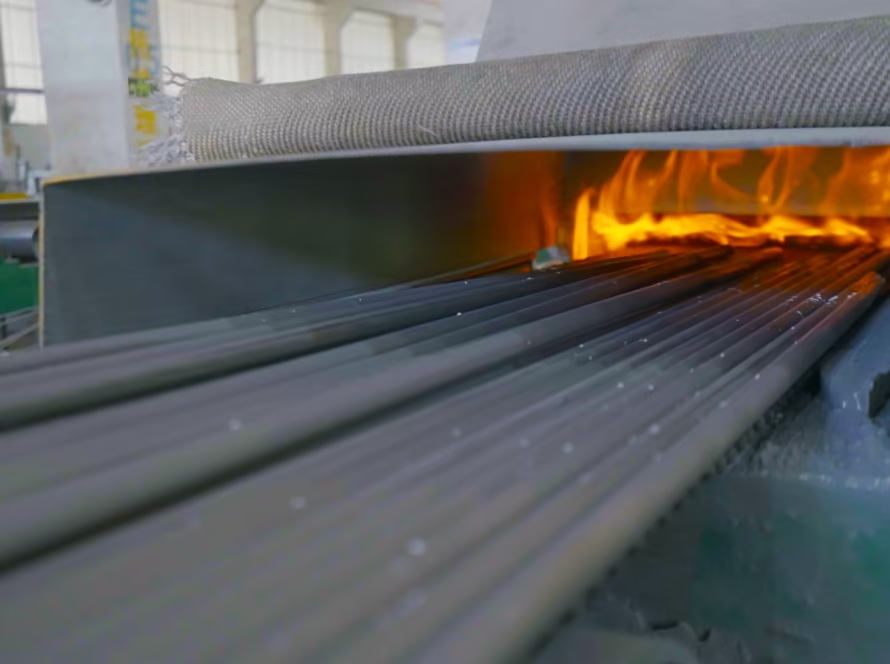
ERW (Electric Resistance Welded) pipes are made by rolling a flat strip of steel into a cylindrical shape and then using high-frequency electric current to heat the edges. These heated edges are pressed together to form a continuous weld seam without any filler material. This creates a strong bond through the metal’s own material.
-
EFW (Electric Fusion Welded) pipes employ a fusion welding method—often using an electron beam, electric arc, or other fusion techniques—to melt the edges of the steel before joining them. This process creates a weld seam through melting and fusion, which typically results in a stronger, denser, and more uniform joint compared to ERW.
Heat-Affected Zone and Weld Quality
-
ERW welding produces a narrow heat-affected zone (HAZ), which leads to good uniformity and toughness in the weld seam, often close to the properties of the base metal.
-
EFW welding yields an even narrower HAZ and a more consistent and stronger bond, giving EFW pipes higher pressure capacity and better durability.
Material Thickness & Applications
-
ERW is typically used for thinner-walled pipes and is known for efficient, cost-effective production. It is a predominant method in industries such as plumbing, HVAC, fire suppression, automotive, aerospace, rail, electronics, energy, and general industrial applications.
-
EFW is better suited for thicker-walled pipes and demanding environments. It’s often used in fields such as petrochemical, chemical processing, food processing, and other high-pressure or corrosive systems—serving as a cost-efficient alternative to seamless pipe.
Cost & Complexity
-
ERW manufacturing requires simpler and more common machinery, making it highly efficient and cost-effective.
-
EFW involves more complex welding equipment and processes, which generally makes it more expensive. However, its superior pressure rating and strength make it a competitive choice in tough applications.
Summary Table
| Feature | ERW (Electric Resistance Welded) | EFW (Electric Fusion Welded) |
|---|---|---|
| Welding Method | Resistance welding, high-frequency current | Fusion welding using arc, electron beam, etc. |
| Heat-Affected Zone | Narrow, good weld uniformity | Narrower, stronger and denser weld |
| Material Thickness | Thin-walled applications | Thick-walled, high-strength applications |
| Cost & Equipment Complexity | Lower cost, simpler machinery | Higher cost, more complex equipment |
| Typical Applications | HVAC, plumbing, general industrial use | Petrochemical, chemical, high-pressure pipelines |
| Pressure Strength & Durability | Solid performance, lower than seamless | High pressure, robust—often an alternative to seamless |
Final Suggestions
-
Use ERW when your project requires cost-efficiency, fast production, and works well with thinner-walled pipe—such as for standard plumbing, HVAC, or structural support.
-
Use EFW when you need high strength, and durability, and are dealing with high pressure, corrosive environments, or thicker walls—like in petrochemical or industrial pipeline systems.


1 Comment
シャオエ・シウ・ナイ
いいですね