Description
GB/T 3094 Q195, Q215, Q235 Cold‑Drawn Special Shape Steel Tubes for Mechanical Engineering, Automotive Industry and Structural Applications
Material Specification
GB/T 3094 is a Chinese national standard specifying the technical requirements for cold‑drawn simple‑section special shape steel tubes. These tubes are manufactured by the cold‑drawing process to meet the demand for non‑circular cross‑section tubes in mechanical structures, the automotive industry, construction machinery and general engineering. This standard covers carbon structural steel grades including Q195, Q215 and Q235. Each grade has different chemical and mechanical properties, making them suitable for applications ranging from general structural components to medium‑strength transmission parts.
Key Features
-
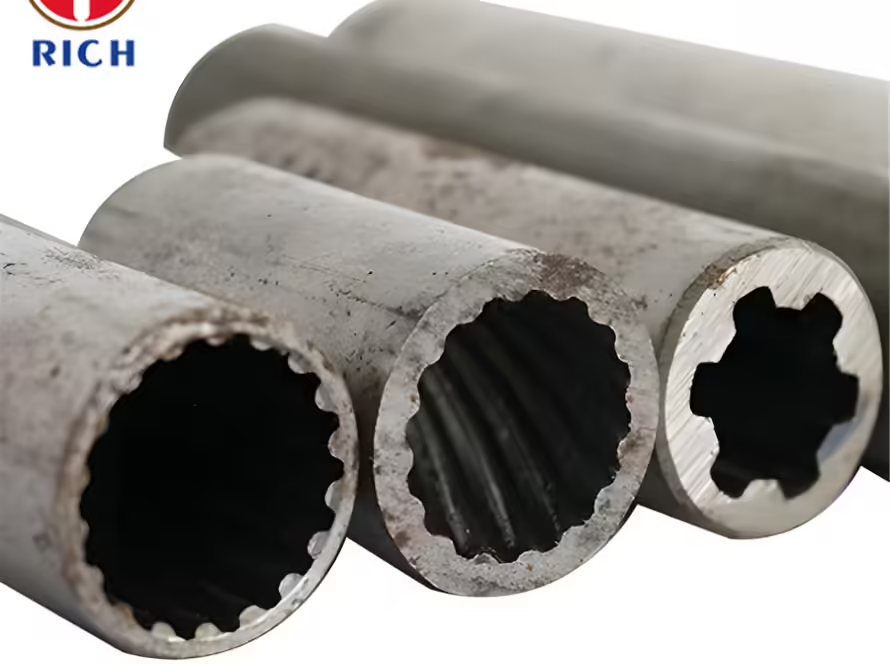
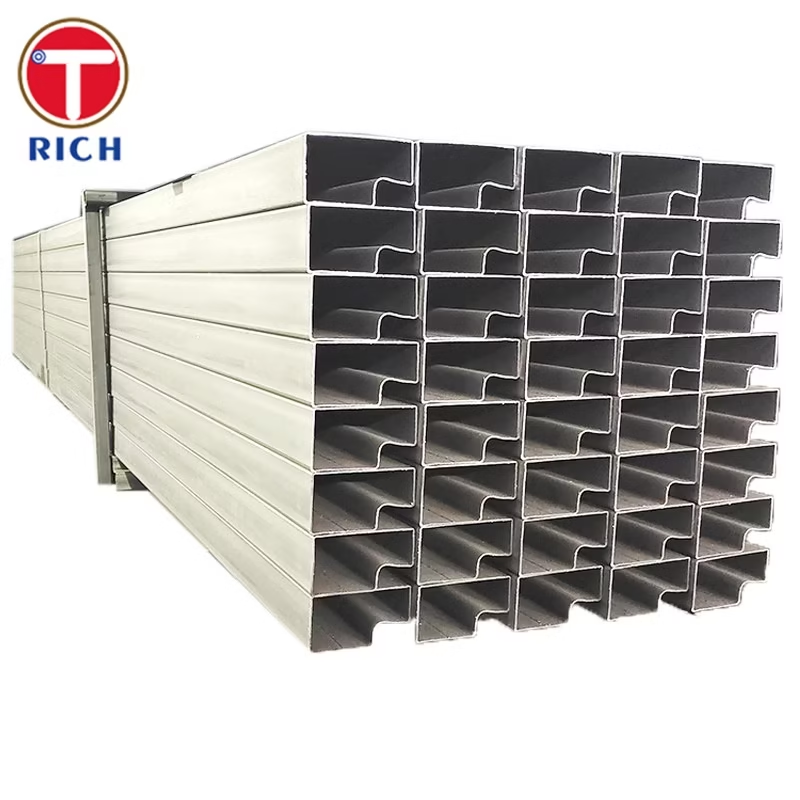
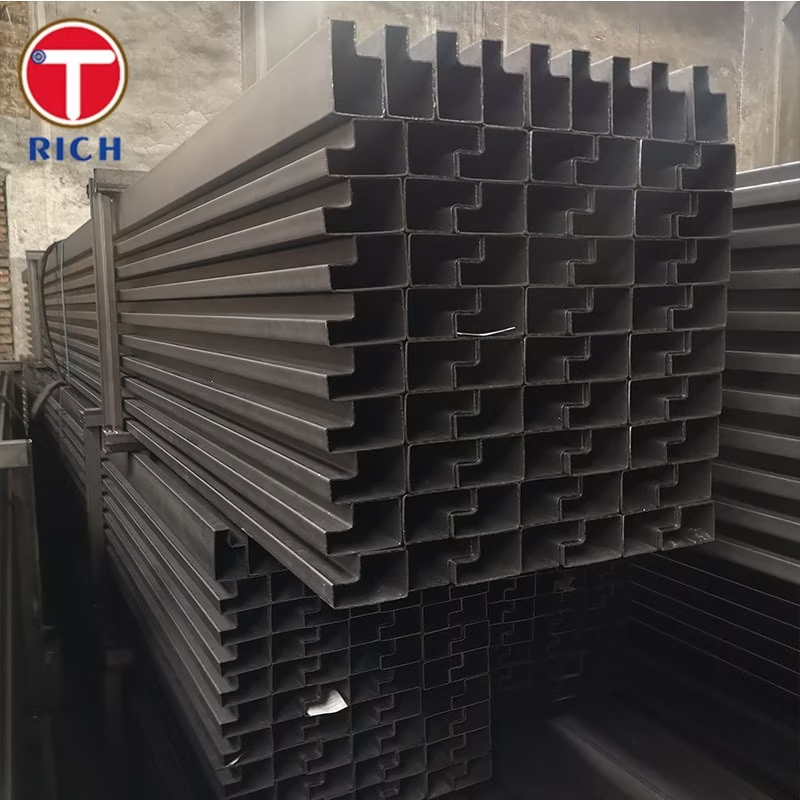
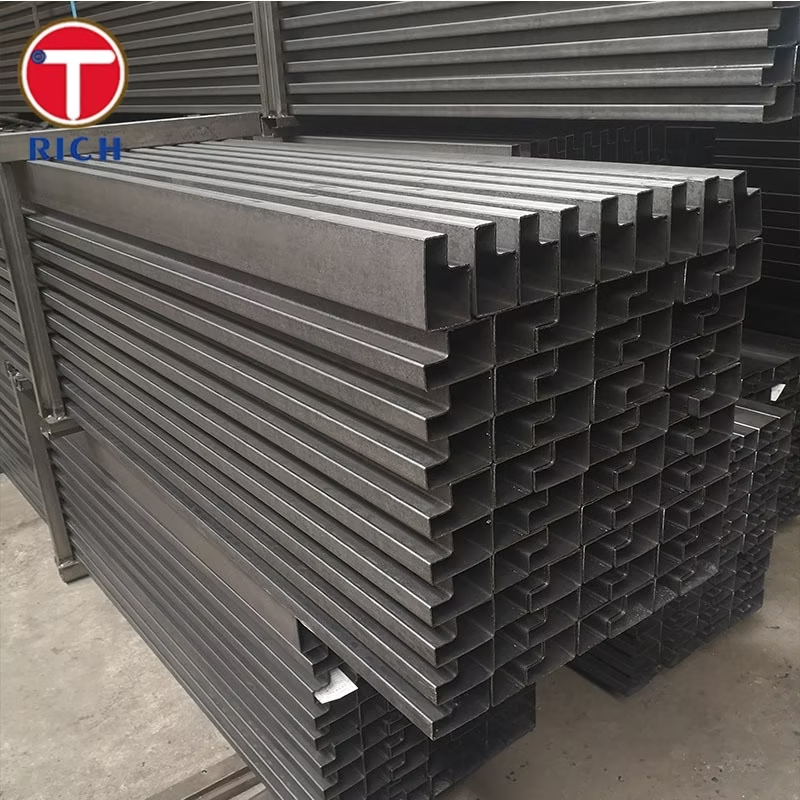
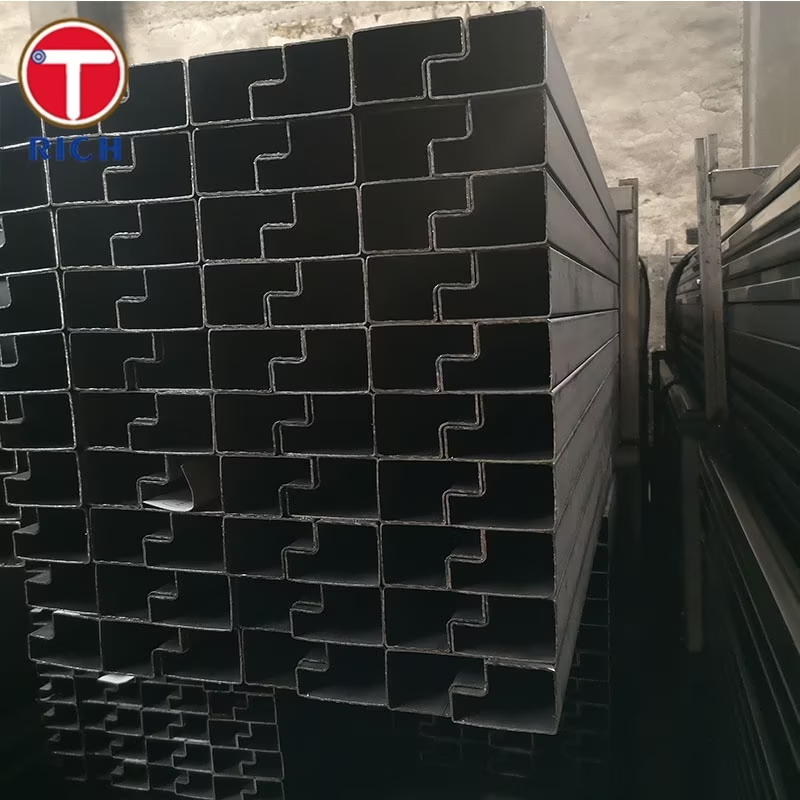
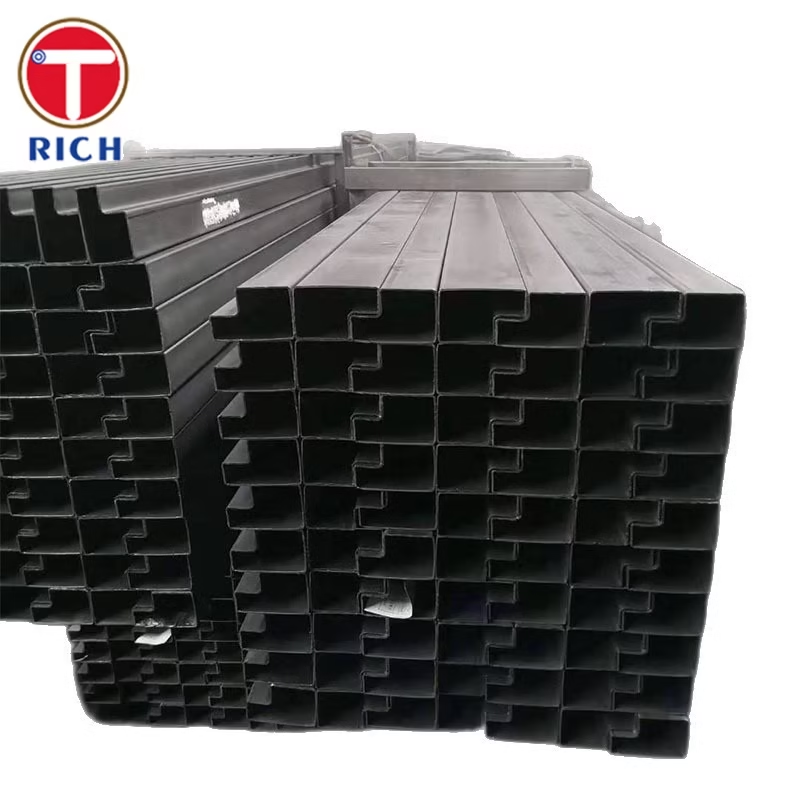
Wide range of cross‑sectional shapes : The standard covers square tubes (D‑1), rectangular tubes (D‑2), elliptical tubes (D‑3), flat‑elliptical tubes (D‑4), hexagonal tubes (inside and outside) (D‑5), and right‑angled trapezoidal tubes (D‑6).
-
Excellent mechanical properties : Compared with round tubes, special shape tubes have higher moment of inertia and section modulus, offering improved bending and torsional resistance while achieving 15%–30% weight reduction.
-
High dimensional accuracy and surface quality : The cold‑drawing process gives tight dimensional tolerances and smooth internal/external surfaces. Outer side length tolerance can reach ±0.3 mm, wall thickness tolerance ±10%, and surface roughness Ra 3.2 μm.
-
Good weldability and workability : Q195, Q215 and Q235 are all low‑carbon steels with excellent cold‑forming, welding and machining properties, facilitating secondary processing and on‑site installation.
-
Cost‑effective : Compared with seamless tubes, cold‑drawn special shape tubes save 12%–25% of steel. Compared with round tubes, the special cross‑section directly meets structural shape requirements, reducing subsequent processing.
-
Strong customisation capability : The cold‑drawing process supports non‑standard die production and small‑to‑medium batch customisation, meeting special cross‑section and size requirements.
Chemical Composition
| Element | Q195 (%) | Q215 (%) | Q235 (%) |
|---|---|---|---|
| (C) | 0.06–0.12 | 0.09–0.15 | 0.14–0.22 |
| (Si) | ≤ 0.30 | ≤ 0.30 | ≤ 0.30 |
| (Mn) | 0.25–0.50 | 0.25–0.55 | 0.30–0.65 |
| (P) max | 0.045 | 0.045 | 0.045 |
| (S) max | 0.050 | 0.050 | 0.050 |
Mechanical Properties
| Element | Q195 (%) | Element | Q195 (%) |
|---|---|---|---|
| Min. Yield Strength (MPa) | 195 | 215 | 235 |
| Tensile Strength (MPa) | 315–430 | 335–450 | 370–500 |
| Min. Elongation (%) | 25 | 25 | 25 |
Steel Grades
-
Q195 : The lowest strength grade, but with excellent plasticity, toughness and cold‑bending properties. Suitable for structural components subject to light loads and requiring high deformation capacity, such as decorative frames, furniture tubes and guardrails.
-
Q215 : Intermediate strength grade with good overall properties, balancing moderate strength and good plasticity. Suitable for general mechanical structural parts, automotive components and building supports.
-
Q235 : The most commonly used carbon structural steel grade, offering excellent overall mechanical properties with a good balance of strength and ductility. Widely used in mechanical engineering, the automotive industry, engineering structures and building decoration.
Cross‑Sectional Shapes and Classification
-
D‑1 Square tubes : Four equal sides, uniform wall thickness – most widely used.
-
D‑2 Rectangular tubes : Two pairs of unequal sides – suitable for applications requiring a specific moment of inertia in one direction.
-
D‑3 Elliptical tubes : Elliptical cross‑section – combining aesthetics and mechanical performance.
-
D‑4 Flat‑elliptical tubes : Flattened elliptical cross‑section – suitable for confined spaces.
-
D‑5 Hexagonal tubes (inside and outside) : Regular hexagonal cross‑section – suitable for fasteners and transmission components.
-
D‑6 Right‑angled trapezoidal tubes : Right‑angled trapezoidal cross‑section – suitable for applications requiring specific mating surfaces.
Applications
-
Mechanical engineering : Machine tool frames, guide rails, support members, bearing housings, hydraulic cylinder tubes.
-
Automotive industry : Drive shafts, chassis structural members, suspension components, anti‑roll bars, steering columns.
-
Construction machinery : Forklift masts, crane structural parts, agricultural machinery frames.
-
Building and decoration : Curtain wall keels, guardrails, window/door frames, decorative steel members, furniture frames.
-
General engineering : Shelving, fitness equipment, exhibition props, agricultural equipment.
Possible Alternative Standards
-
GB/T 6728 : Cold‑formed hollow sections for general structures, used in building and general engineering.
-
ASTM A500 : American standard for cold‑formed welded and seamless carbon steel structural tubing in rounds and shapes.
-
ASTM A513 : American standard for electric‑resistance‑welded carbon steel mechanical tubing, suitable for mechanical engineering and structural applications.
-
EN 10219 : European standard for cold‑formed welded non‑alloy and fine grain structural hollow sections.
-
JIS G3466 : Japanese standard for square and rectangular steel tubes for general structures.