Description
EN 10305-5 E195, E235, E260 etc. Welded Cold‑Sized Precision Square and Rectangular Steel Tubes for Automotive, Furniture and General Engineering Applications
Material Specification
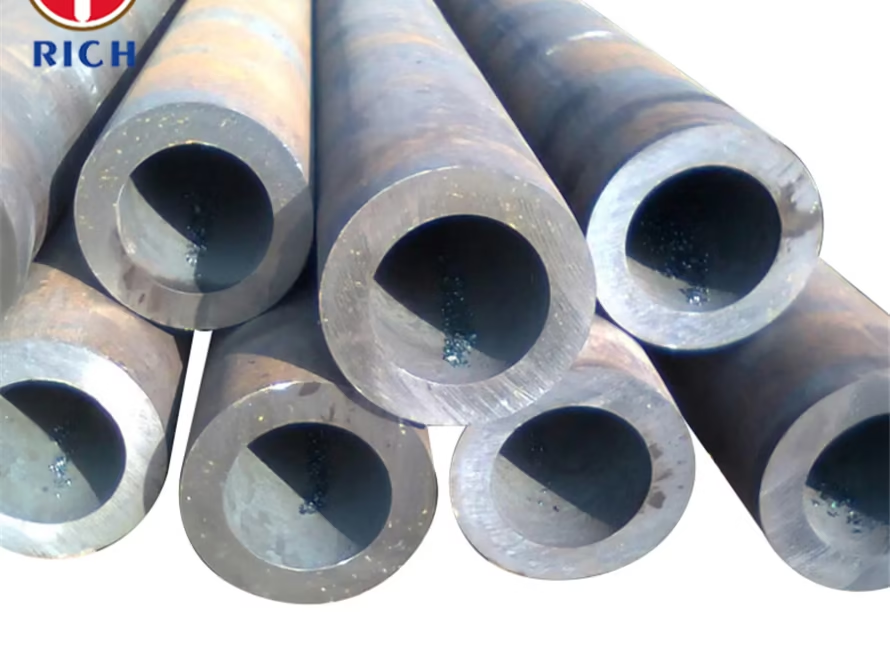
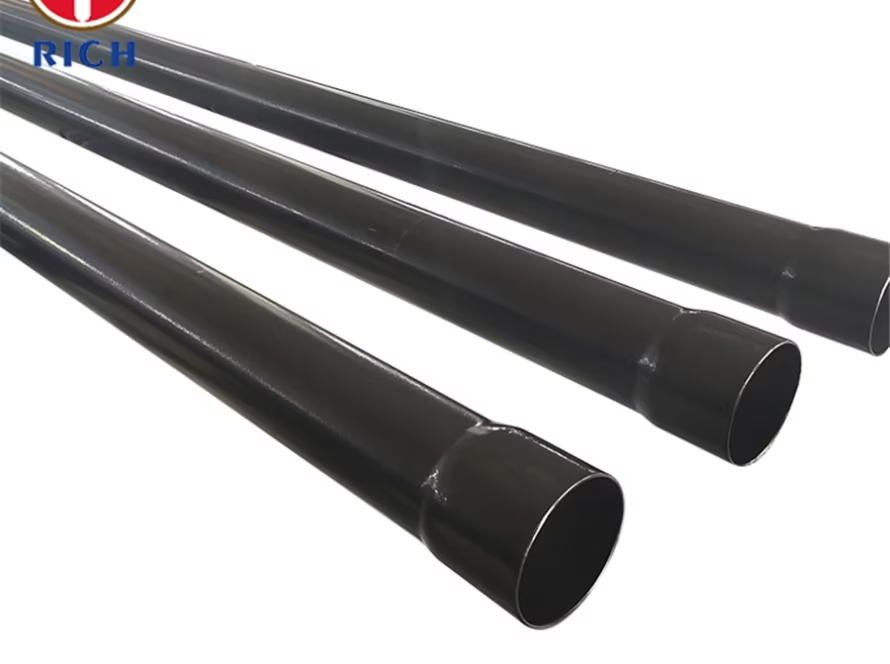
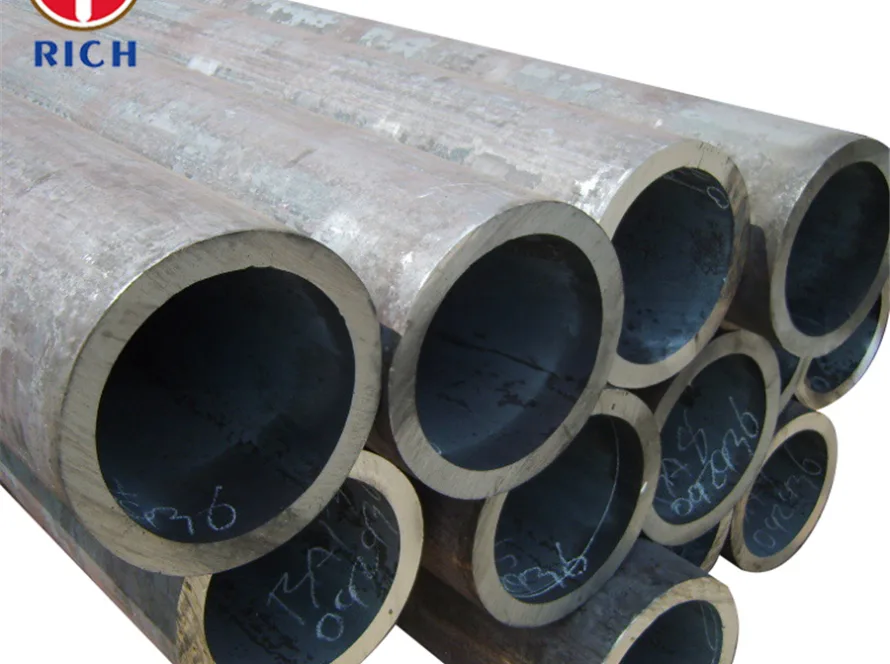
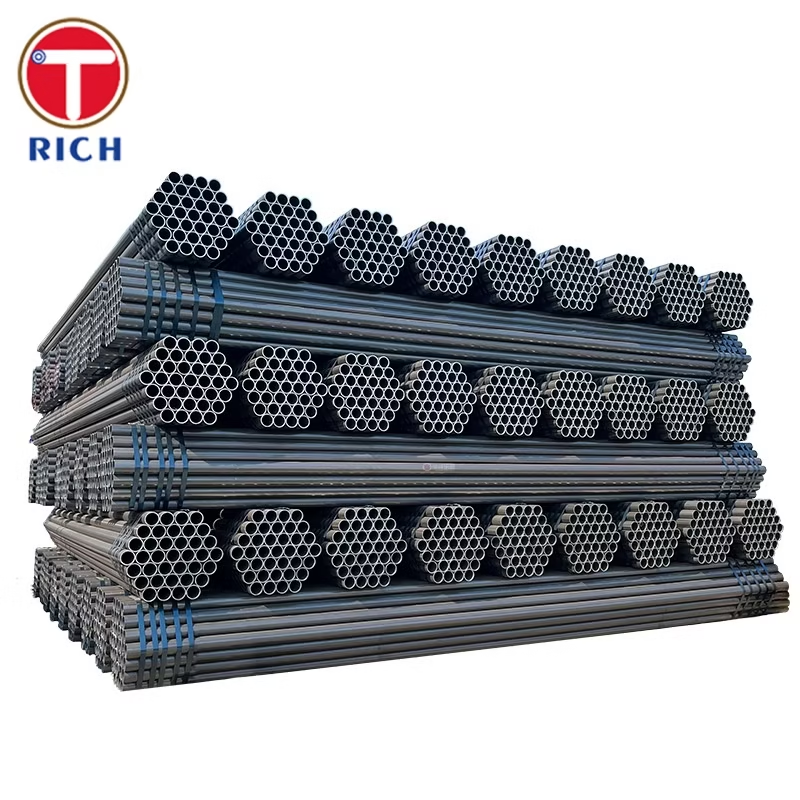
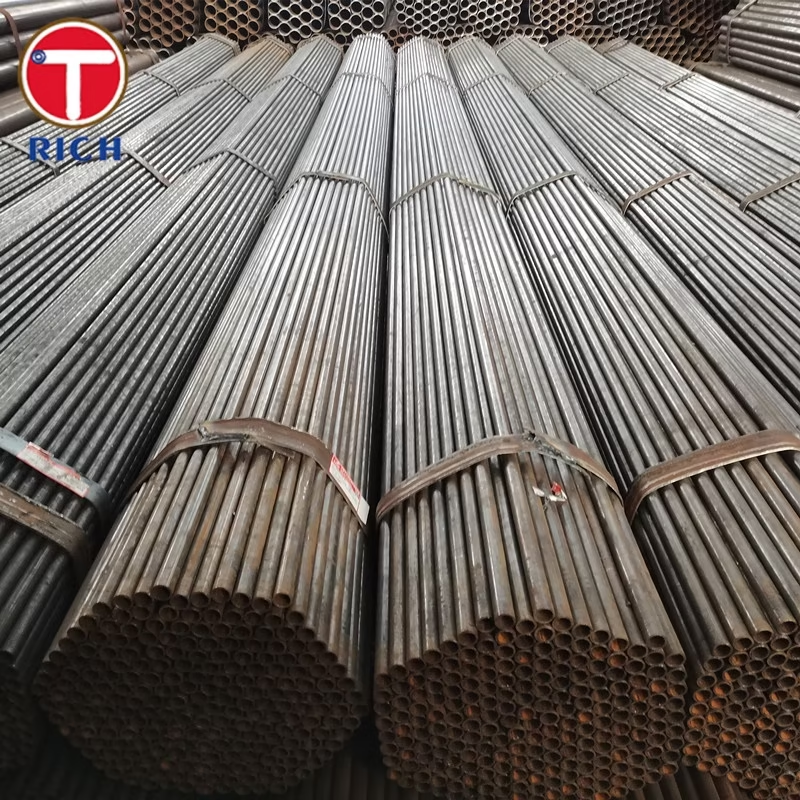
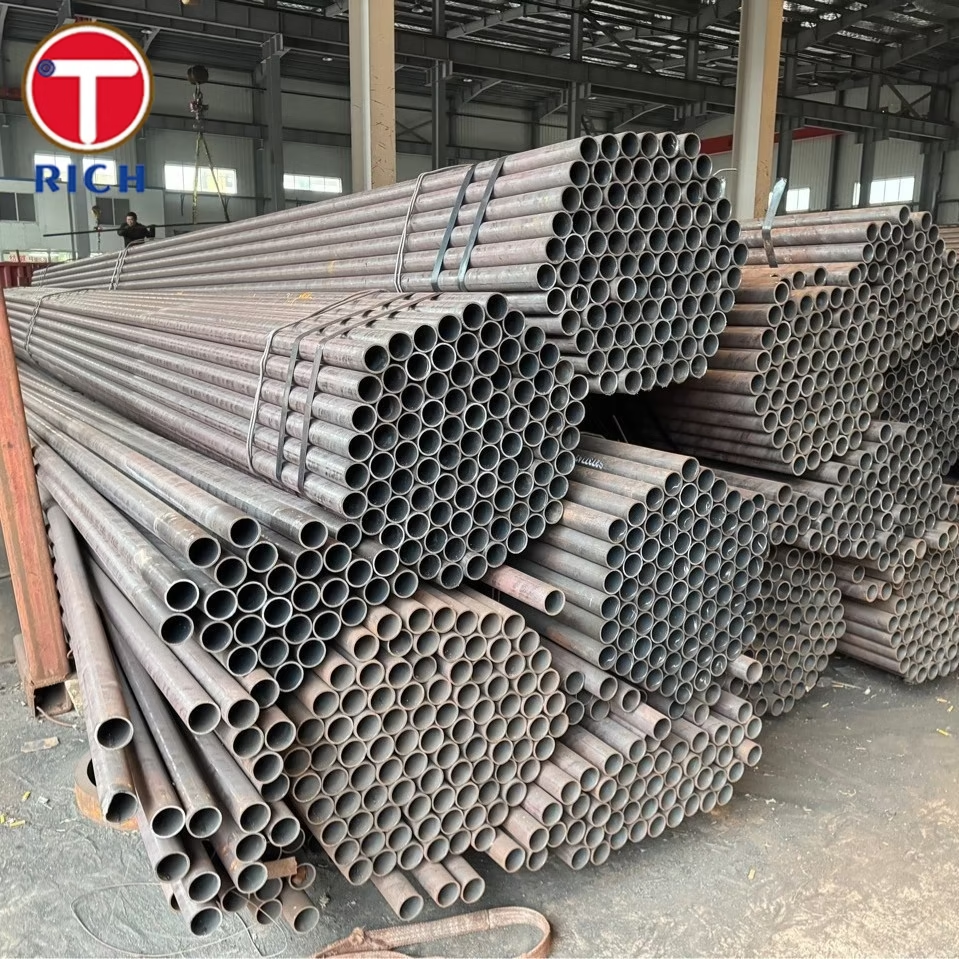
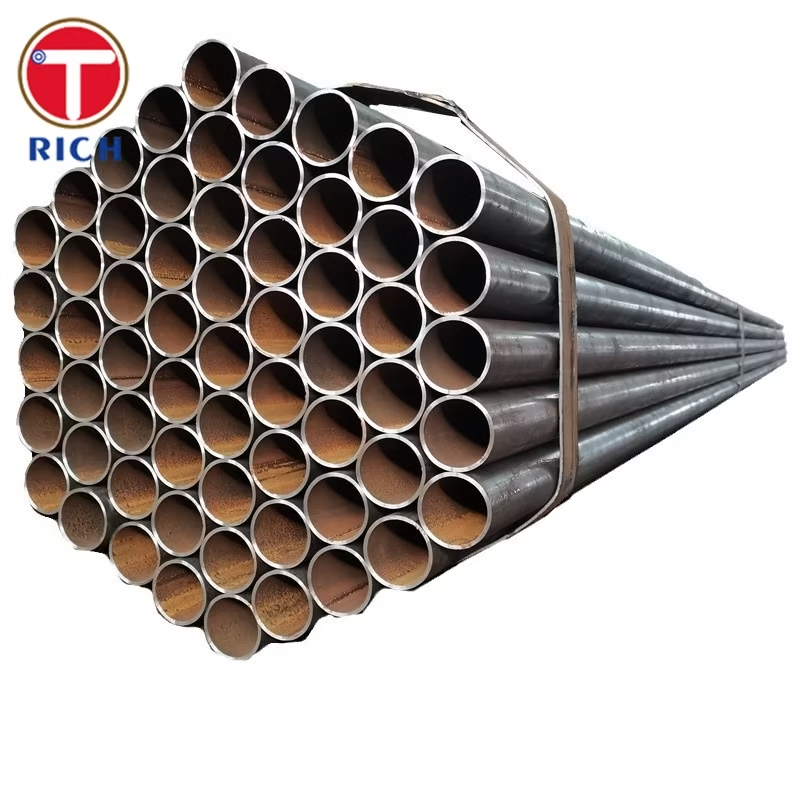
EN 10305-5 is a European standard specifying the technical delivery conditions for welded cold‑sized square and rectangular steel tubes for precision applications. These tubes are manufactured from steel strip by high‑frequency welding (HFW), followed by sizing and/or cold drawing processes, achieving precisely defined dimensional tolerances and specified maximum surface roughness. The standard covers 16 steel grades of non‑alloy and micro‑alloy steels, of which grades E195, E235, E260 etc. are the most commonly used types. They offer moderate strength, good weldability and excellent formability, suitable for applications ranging from general frameworks to automotive chassis components.
Key Features
-
Precision dimensional control : Tubes are manufactured with strictly defined dimensional tolerances. The standard specifies detailed tolerances for outside side length, wall thickness, length, straightness, twist, corner shape and end bevel, meeting high‑precision assembly requirements.
-
Excellent surface quality : Default external surface roughness Ra ≤ 4 μm (Option 9 allows lower values to be specified). For tubes with wall thickness ≤ 1.5 mm, the internal surface generally meets the same requirement. The micro‑roughness of the steel surface is important for subsequent surface treatments such as electroplating.
-
Good weldability : E195, E235 and E260 are low‑carbon equivalent steels with carbon content ≤ 0.17%–0.21% and very low sulphur and phosphorus, offering excellent weldability and suitability for welded structures.
-
Outstanding formability : These grades have high elongation (≥ 22%–26%) and can be subjected to cold bending, flaring, flattening and other secondary processing, facilitating the manufacture of complex‑shaped components.
-
Multiple delivery conditions : The standard provides four uniform delivery conditions (+CR1, +CR2, +A, +N), which can be selected according to application requirements to achieve different balances of strength, formability and weldability.
-
Corner quality control : The standard imposes strict requirements on the internal/external corner radii and wall thickness variations at the corners. For wall thickness T ≤ 2.5 mm, the maximum internal/external corner radius is 1.5 × T, ensuring consistency in welding and forming and structural strength.
Chemical Composition
| Element | E195 (1.0034) | E235 (1.0308) | E260 (1.0220) |
| (C) max | 0.15 | 0.17 | 0.17 |
| (Si) max | 0.35 | 0.35 | 0.35 |
| (Mn) max | 0.70 | 1.20 | 1.20 |
| (P) max | 0.025 | 0.025 | 0.025 |
| (S) max | 0.025 | 0.025 | 0.025 |
| (Al) min | 0.015 | 0.015 | 0.015 |
Mechanical Properties
| Grade | Steel No. | Delivery condition | Min. Yield Strength ReH (MPa) | Tensile Strength Rm (MPa) | Min. Elongation A (%) |
| E195 | 1.0034 | +CR1/CR2/A/N | 195 | 290–430 | 26 |
| E235 | 1.0308 | +N | 235 | 340–480 | 25 |
| E235 | 1.0308 | +CR1/CR2 | 320 | 370–500 | 18 |
| E260 | 1.0220 | +N | 260 | 360–500 | 24 |
Steel Grades
-
E195 : Minimum yield strength 195 MPa, good ductility and high elongation (≥26%). Suitable for light‑load structural components, furniture frames and decorative applications.
-
E235 : The most commonly used general‑purpose grade. In the normalized condition yield is 235 MPa; in the cold‑formed condition yield can reach 320 MPa. It balances strength, ductility and weldability, and is widely used in general mechanical structures, automotive chassis components and engineering frameworks.
-
E260 : Yield strength 260 MPa, lying between E235 and E275. Suitable for applications requiring higher strength than E235 while still maintaining good formability, such as truck racks and agricultural machinery frames.
Delivery Conditions
EN 10305-5 provides four uniform delivery condition codes. The conditions applicable to E195, E235 and E260 are as follows:
-
+CR1 (Cold formed, subsequent annealing permitted) : Tubes are supplied after cold forming; the user may perform annealing if needed. Suitable for applications requiring subsequent cold bending or deep drawing.
-
+CR2 (Cold formed, subsequent heat treatment prohibited) : Tubes are supplied after cold forming, offering high strength but lower ductility. Any subsequent heat treatment by the user is not permitted.
-
+A (Soft annealed) : Tubes are annealed after cold forming, giving good ductility and elongation. Must be performed in a protective atmosphere.
-
+N (Normalized) : Tubes are normalized, refining the grain structure and providing uniform overall mechanical properties. This is the recommended condition for general mechanical structural applications.
Applications
-
Automotive industry : Seat frames, bumpers, anti‑intrusion bars, chassis cross‑members, truck rack frames, coach side‑wall frameworks. E235 in the cold‑formed condition (yield 320 MPa) is often used for chassis structural parts.
-
Furniture manufacturing : Office chair supports, shelving, display racks, indoor and outdoor furniture tube frameworks, fitness equipment (e.g., treadmill frames). E195 and E235 in the normalized condition are the mainstream choices.
-
General engineering : Machine frames, industrial equipment supports, automation equipment stands, conveyor support structures, storage racks, agricultural machinery frames.
-
Building and decoration : Curtain wall keels, scaffold support tubes, window/door frames, guardrails, handrails and decorative metal components.
Possible Alternative Standards
-
ASTM A513 : American standard for electric‑resistance‑welded carbon steel mechanical tubing, covering various special shapes, corresponding in application range to EN 10305-5.
-
ASTM A500 : American standard for cold‑formed welded carbon steel structural tubing for building and general structural use.
-
JIS G3466 : Japanese standard for square and rectangular steel tubes for general structural purposes.
-
GB/T 6728 : Chinese national standard for cold‑formed hollow sections for general structures.
-
EN 10305-3 : European standard for welded cold‑sized circular precision tubes, a companion standard in the same series.